Building a Podcast home in Cambridge

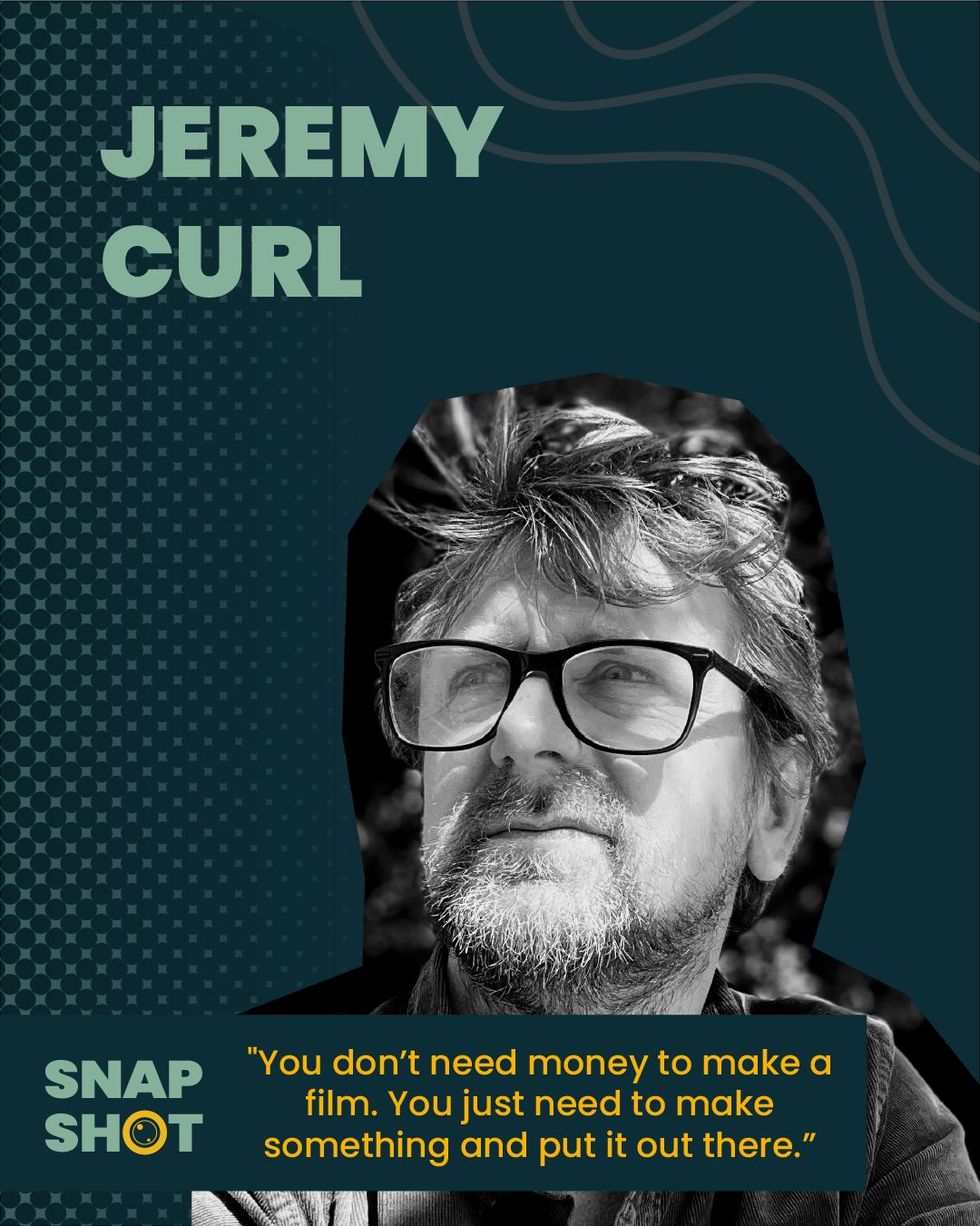
Meet SNAPSHOT: the podcast built in our studio
SNAPSHOT is our ongoing series about photography and moving image. Think of it as the conversation after the exhibition opening—the bit where people relax, say what they really think and occasionally overshare.
The show sits at the intersection of two obsessions:
- people who tell visual stories for a living
- audio that doesn’t sound like it was recorded in a tin shed
➡️ New episodes are released on Spotify and other platforms.
Some episodes go deep with photographers and their process. Others wander into cinema, sound design and storytelling with directors and composers. The format flexes, but the foundation is always the same: a good room, clean sound and a team who know when to push and when to shut up and listen.
Inside the Cambridge podcast studio
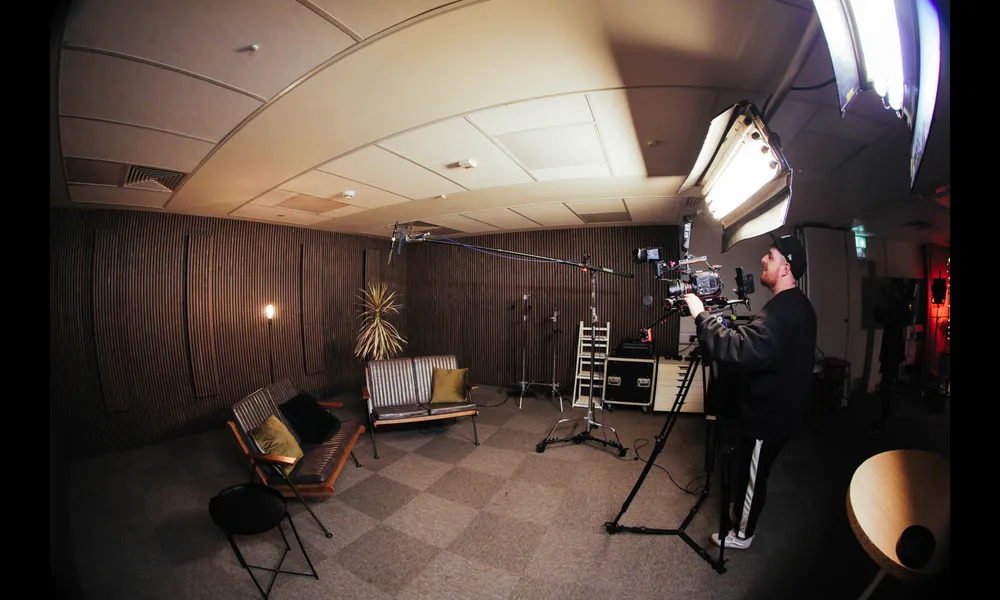
Pic. 1. Our most important team member, pictured here hovering over the sofas, ready to capture your every “umm”.
Our dedicated podcast room is built for one thing: conversations that sound like someone cared.
Practically, that means:
- a purpose-built studio space in central Cambridge
- acoustic treatment so your episode doesn’t echo like a sports hall
- seating for 1–4 speakers, with layouts that can be shuffled to match the vibe
- the option to add video podcasting into the mix
- fast, stable internet for remote guests and live broadcasts
The room doesn’t feel like a meeting space that inherited a microphone; it feels like a small set you can dress to match your guest. Guests walk in, sit down, get settled. We handle the audio checks, levels and recording so you can focus on the conversation.
➡️ You can book it directly as the Cambridge podcast studio, or bring us in as a full production crew.
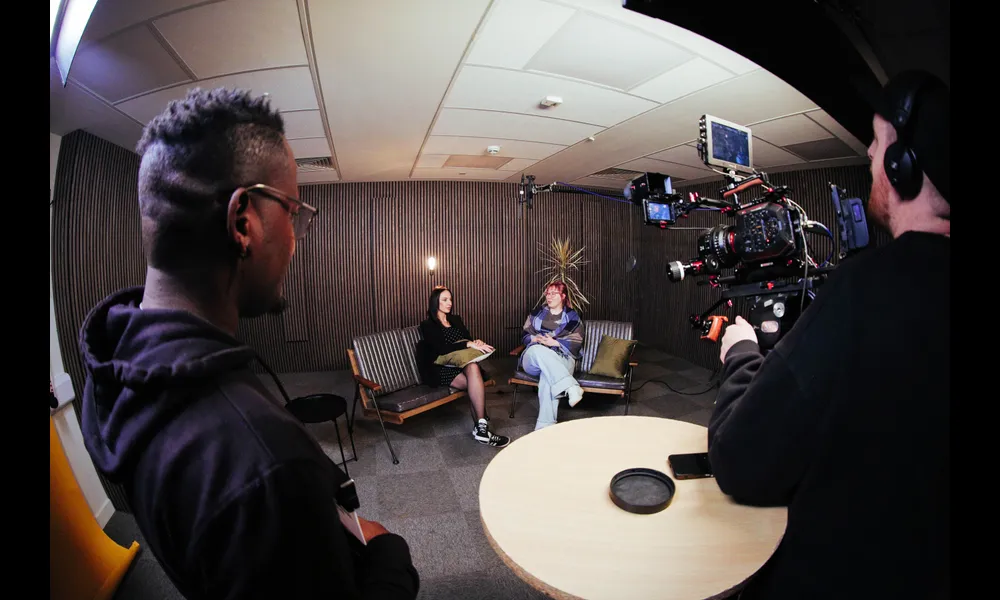
Pic. Proof that “just a quick chat” secretly involves four people, three cables and at least one very serious face behind the camera.
How SNAPSHOT began: a garden, a podcast and mild frustration
SNAPSHOT started, as many good things do, with someone muttering “I could do this better” to themselves.
Dom was in his garden, listening to a podcast interview with photographer Martin Parr. The guest was brilliant. The sound… less so. The kind of episode you tolerate because you love the person speaking, not because it’s pleasant to listen to.
So instead of just complaining to a friend, he launched his own show.
The show started out as “Photography Therapy”, designed as a kind of pressure valve where photographers could really talk about their work (and gear, naturally).
Step one was “conquer Cambridge”—build a podcast that felt like a genuine hub for the city’s photographers, lecturers and visiting artists. The first seven episodes all came from that local ecosystem.
Fast-forward and the show has grown up. SNAPSHOT now stretches from Cambridge to Dubai, Prague, Sicily and beyond, with a guest list that includes photographers, directors, composers and actors.
[pic of Martin Parr with Dom]
Three hosts, three languages
SNAPSHOT isn’t a solo act. It’s more like a rotating trio:
- Dom leads the charge on photography
- Tom and Riccardo dive into cinema and moving image
- Episodes slip between English, Italian and Lithuanian, depending on the guest
The result is the conversations that don’t feel trapped in one city, one language or one way of seeing. It also mirrors how we work as a creative studio—collaborative, multilingual, and very comfortable when everyone at the table brings a different perspective.
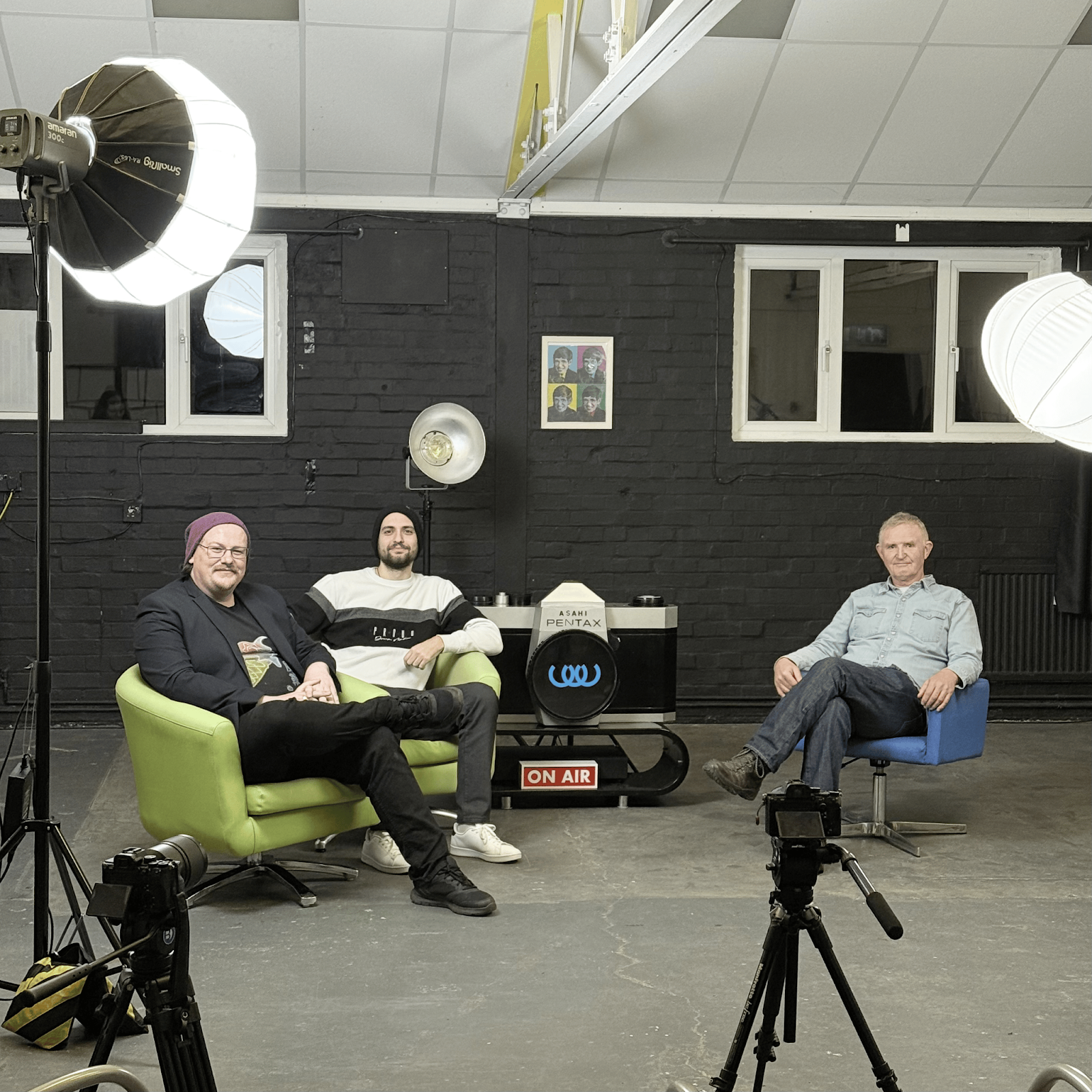
Pic. Yes, that’s us. No, we don’t always look this put together. Please admire the rare moment of everyone facing the same direction.
Planning episodes: hunting for stories
Behind each episode is a fairly simple rule: “Is this person actually interesting to listen to?” Followers are nice. A good story is non-negotiable.
The team:
- seek out photographers, filmmakers and artists who’ve genuinely shifted something in their field
- sketch themes and prompts in advance, then keep the questions light so the conversation can breathe
- stay usually two episodes ahead in the calendar so recordings never feel like a last-minute scramble
SNAPSHOT originally started as a “seven questions” format. These days the structure is looser, but one ritual stuck: each guest leaves a question for the next one. It keeps the series feeling like a chain of conversations, not a stack of disconnected interviews.
The same editorial brain is available if you’re a brand, university or creator who wants help planning a show rather than just renting a room and hoping for the best.
Recording days: what it feels like in the room
On a recording day, the goal is simple: guests forget the equipment is there.
A typical session looks like this:
- the studio is pre-set before anyone arrives
- mics, levels and headphones are checked once everyone’s comfortable
- the gear disappears into the background and the chat takes over
We’ve favoured Rode microphones and use Riverside.fm for high-quality remote recordings and live streaming. It means you can pull in a guest from another country without asking them to balance their laptop on a stack of books.
The most common issue in podcasting isn’t mysterious “audio gremlins”. It’s the internet. That’s why we rely on solid connectivity in the studio and strongly advise against “my friend’s kitchen” as a recording venue.
If you book the Cambridge podcast studio, you can bring your own engineer or ask for a Cambridge Chronicles producer to sit in, steer the session and keep an eye on the dials.
How we edit: real conversations, lightly tidied
Our editing philosophy is surprisingly low-drama.
Dom’s rule: keep episodes as whole as possible. We trim the obvious stuff—long silences, coughs, the moment someone drops their water bottle—but we’re not trying to make people sound like robots. Real conversations wander a bit. That’s the charm.
Guests are encouraged to lean on good mic technique and natural pacing. Dom often points out that “headphones are usually good mics”, which sounds like a joke but also translates to: use the right tool, and use it properly.
On the technical side, a typical episode takes around two hours to edit from raw recording to ready-to-upload. That includes tightening, light clean-up and exports for platforms like Spotify and YouTube.
For clients who want more, we can layer in:
- music and branded stings
- intros and outros
- short clips for social
- full video versions for YouTube and campaigns
Same rule applies throughout: honest, well-captured conversations first; polish second.
Guest highlights and big moments
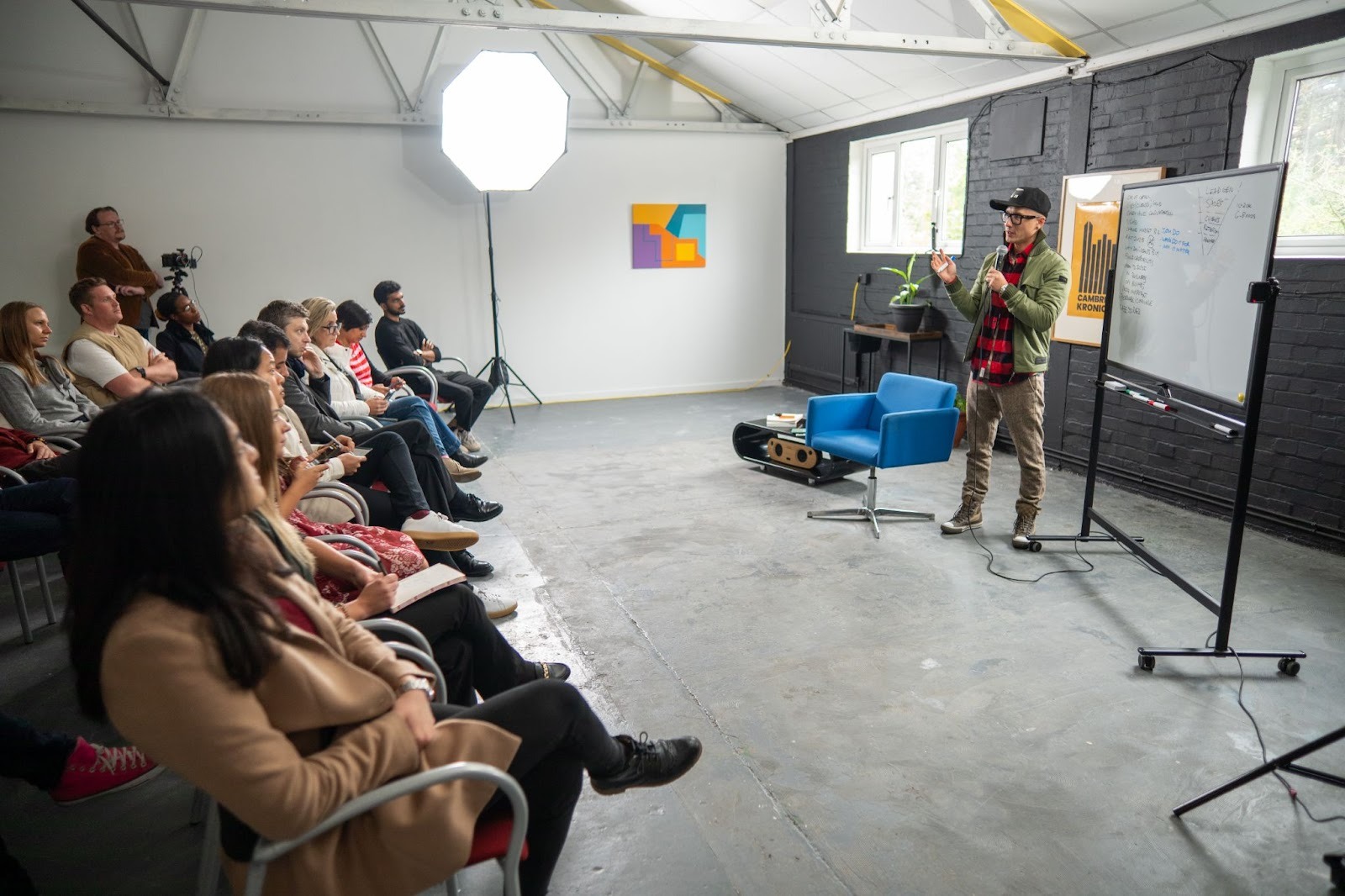
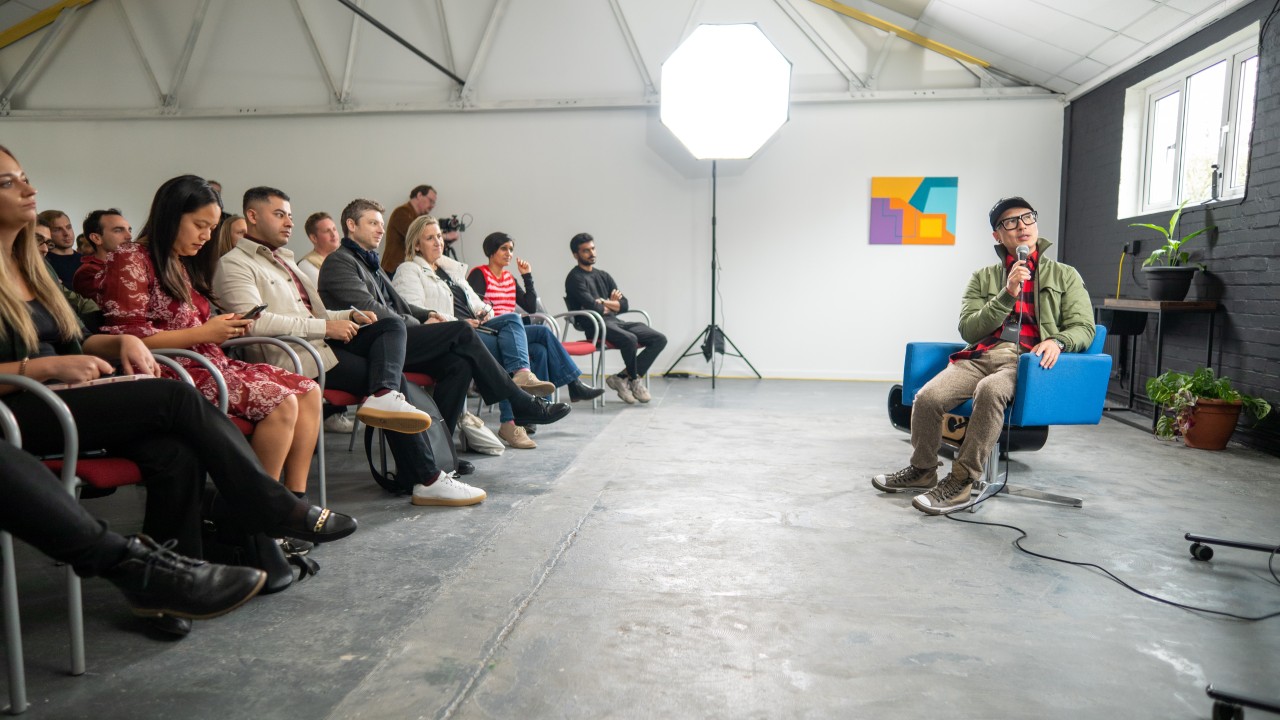
Pic. Masterclass mode: Chris Do, one whiteboard, a captive audience and about 47 ideas per minute. Our studio’s still recovering.
One of our favourite SNAPSHOT moments so far: designer and educator Chris Do flying in from LA.
We turned his visit into a live masterclass and a podcast recording in the studio. It was one of the first big tests of the space: can this room handle a high-profile guest, a live audience and a recorded episode without breaking a sweat? Answer: yes.
Since then, the studio has hosted:
- internationally recognised photographers
- movie directors and cinematographers
- composers and performers
- guests from all corners of the world
If that’s the level of conversation you’re aiming for, you’re literally one booking away from the same setup.
Dom’s advice if you’re starting your own podcast
Dom’s tips for new podcasters are mercifully practical.
General survival rules:
- Give yourself time: Don’t arrive at the studio in mid-email.
- Charge everything: Cameras, laptops, recorders.
- Hide your keys and phone: You’d be amazed how loud a vibrating phone is in a quiet room.
Three fast audio upgrades:
- Work with an audio engineer, at least for your early episodes.
- Use a proper mic, not your laptop’s built-in whisper.
- Focus on having a real conversation instead of reading a questionnaire.
The Cambridge podcast studio is designed so most of this is baked in. Good gear, solid room, support if you want it. If you need help with the bigger picture—concept, series format, how this all supports your wider brand—that’s where Cambridge Chronicles steps in.
Hire the SNAPSHOT studio for your own podcast
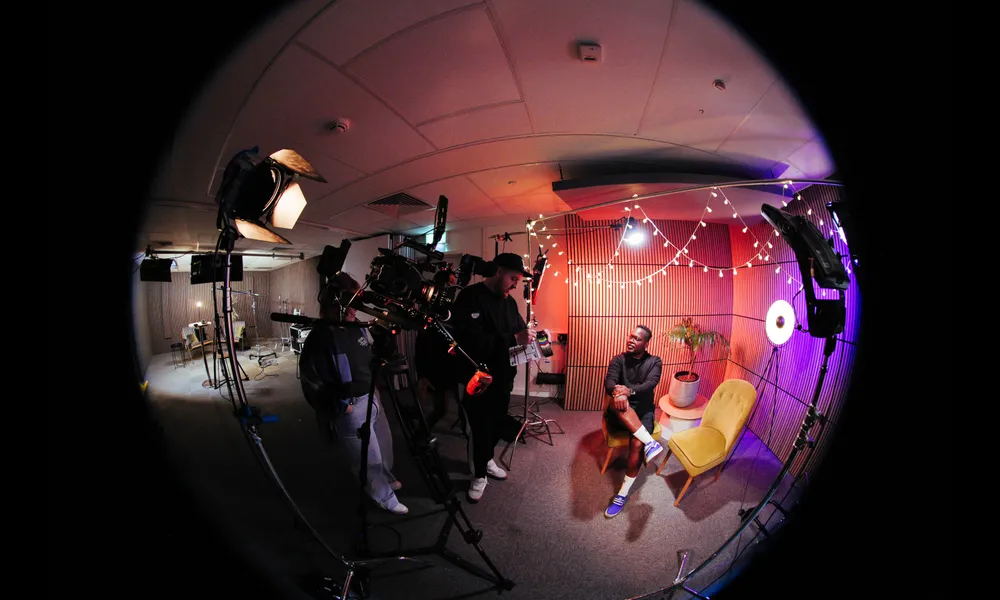
Pic. Camera, lights, mic, record… all under fairy lights. It’s not Christmas, we just like our podcasts slightly festive at all times.
Everything you’ve just read happens in a room you can actually book.
The Cambridge podcast studio works brilliantly for:
- long-form podcast series
- interview shows and roundtables
- audio documentaries and voiceovers
- video-podcast setups and remote-guest recordings
In plain English, you get:
- a dedicated podcast room, treated for clean sound
- space for one to four speakers
- a solid recording chain and fast internet
You can hire the studio as “room and gear”, or stack on:
- a producer/engineer from Cambridge Chronicles on the day
- help developing the show’s format and structure
- full episode editing and delivery
- social-ready clips and campaign assets
We built the space because we needed somewhere good to record. We rent it out because other people do too.
Beyond audio: other Cambridge Chronicles studios you can book
The podcast room is just one part of a larger playground.
Cambridge production studio – blackout film & photo space
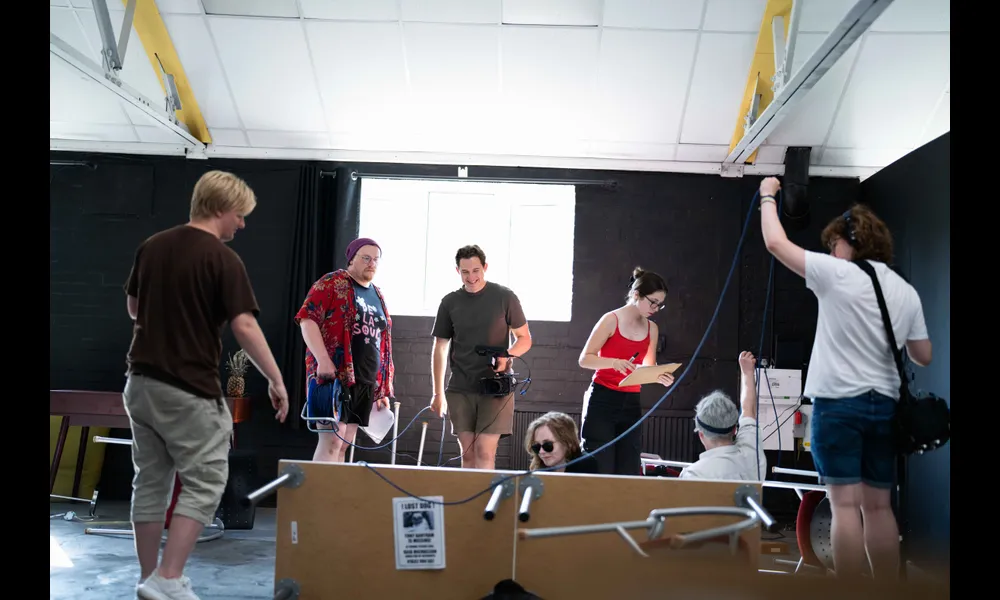
Pic. We’re not dismantling a table, we’re mid-creation. Tom merely looks like he’s telling gravity what to do.
Our main production studio is a true blackout space in central Cambridge, around 1,160 sq ft with capacity for roughly 50 people, on-site parking and self check-in. It’s the room you use when you want total control over light and sound.
Perfect for:
- campaign films and branded content
- product, fashion or editorial shoots
- interviews, panels and education content
- workshops and small-scale events that need a proper stage
[Embed: https://www.youtube.com/watch?v=GcCE7t74Gd4]
➡️ You can see more and book via the Cambridge production studio listing.
Cambridge conference centre – big room, big energy
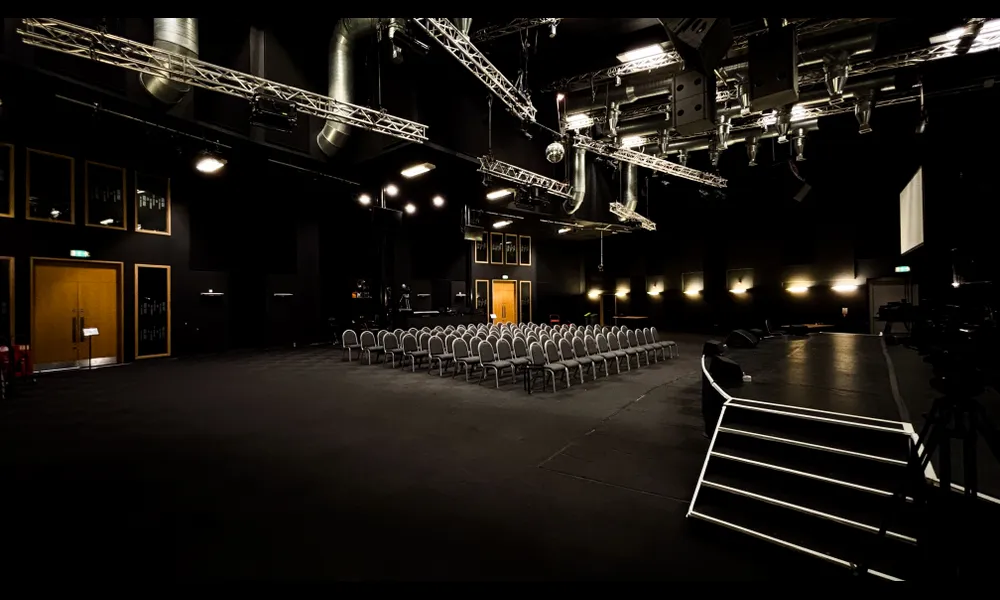
Pic. Our XXL production arena: for when your idea is “tiny” but your audience is 450 of your closest friends.
➡️ For larger audiences, there’s the Cambridge Conference Centre:
- a main hall for up to 450 guests
- a full stage with advanced AV and live-streaming
- multiple breakout rooms for workshops of up to 35 people
Ideal for:
- conferences and summits
- product launches and trade shows
- awards nights and community events
- hybrid events where you want to capture content as well as host a crowd
On site you also get a professional media studio, technicians, first aiders, cleaners and event organisers. Translation: you don’t have to build an events team from scratch.
Explore all our spaces
➡️ If you’d like to browse everything in one place—from the podcast studio to the bigger arenas—you’ll find the full set of locations on our Scouty profile.
Closing: bring your ideas, we’ll bring the stages
SNAPSHOT is just one example of what happens when the right people, the right space and a half-decent idea meet in the middle.
As Cambridge Chronicles, we:
- produce and host the podcast
- design and run the studios
- help brands, universities and creators turn their stories into shows, campaigns and events
At the core of all that is one thing: we see what you don’t—the angles, formats and stories hiding in plain sight.
If you’re ready to start something, here are three easy next steps:
- Listen to SNAPSHOT on Spotify and hear what the studio sounds like in action.
- Book the Cambridge podcast studio via Scouty for your own recording.
- Talk to the Cambridge Chronicles team about how a podcast—or a live event, or a video series—fits into your wider creative strategy.
You bring the story. We’ll handle the room. And the bit you haven’t quite seen yet.