Gabriele D’Agostino on pure goals, stolen moments, and the metro as a studio
Gabriele D’Agostino on pure goals, stolen moments, and the metro as a studio
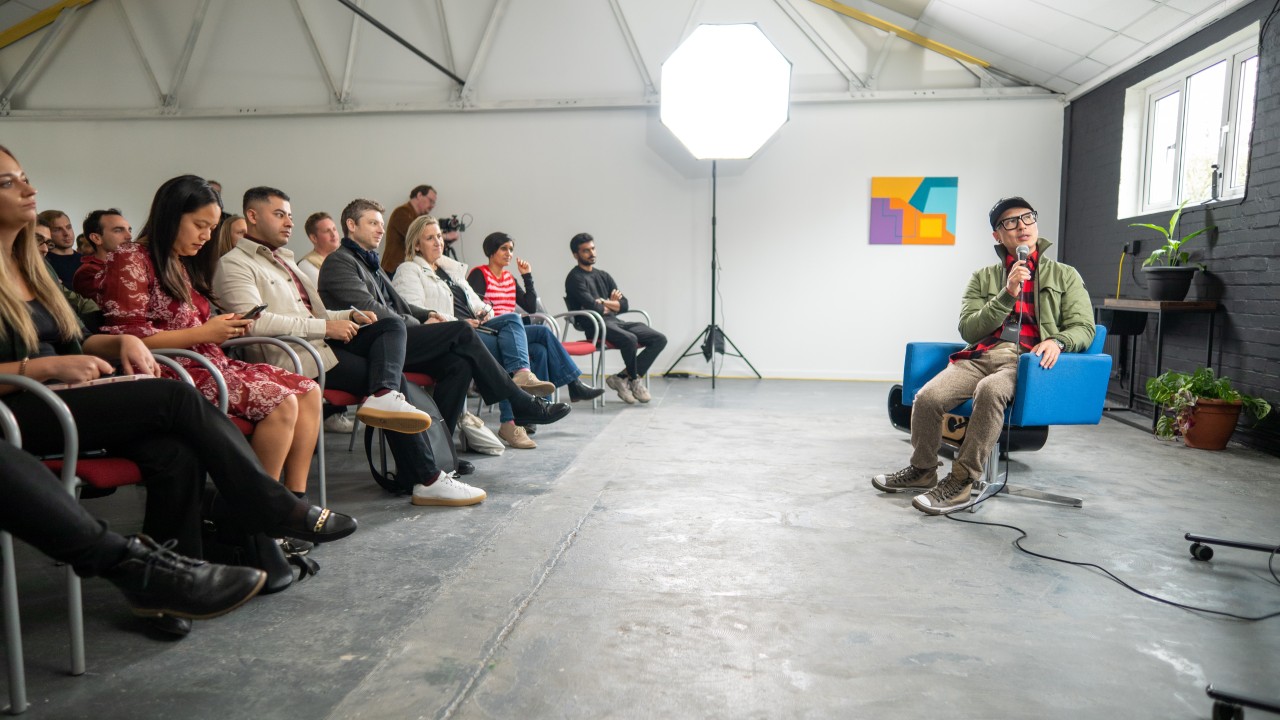
In the course of another rummage through Snapshot episodes, we found ourselves returning to Episode 11, recorded on 14 April 2025, when we sat down in our Cambridge studio with Gabriele D’Agostino, known to many simply as Dago, for a conversation that begins in an orderly two-person rhythm and ends, rather charmingly, with a few additional voices joining in for questions.
It’s a format shift that could easily become a mess, yet here it lands rather well, because the heart of the episode is not the number of speakers but the easy confidence of the guest. Gabriele has the sort of presence that doesn’t require a spotlight; he gives you the sense that he is less interested in putting on a show than in saying the thing as plainly as possible, then letting it sit there on the table, like a cup of espresso with no need for garnish.
Early on, he offers a line that sounds deceptively simple until you realise it contains the whole philosophy: his goal is “to tell a story behind the shot,” and to make people feel what sits behind a photograph, which is a rather inconvenient ambition if you’re hoping to coast on good lighting alone. “My goal is pure,” he says. “I want to make it last forever.”
If you are the type of person who has ever stared at a photo and felt a small click of recognition, something like, “Yes, that was real”, then you’ll understand why we’ve decided, upon revisiting the archive, to highlight this conversation again. It’s the sort of episode that tidies your thinking, in the best way, while also leaving you mildly suspicious of how much time you’ve spent chasing “impressive” rather than “true.”
Who is Gabriele “Dago” D’Agostino?
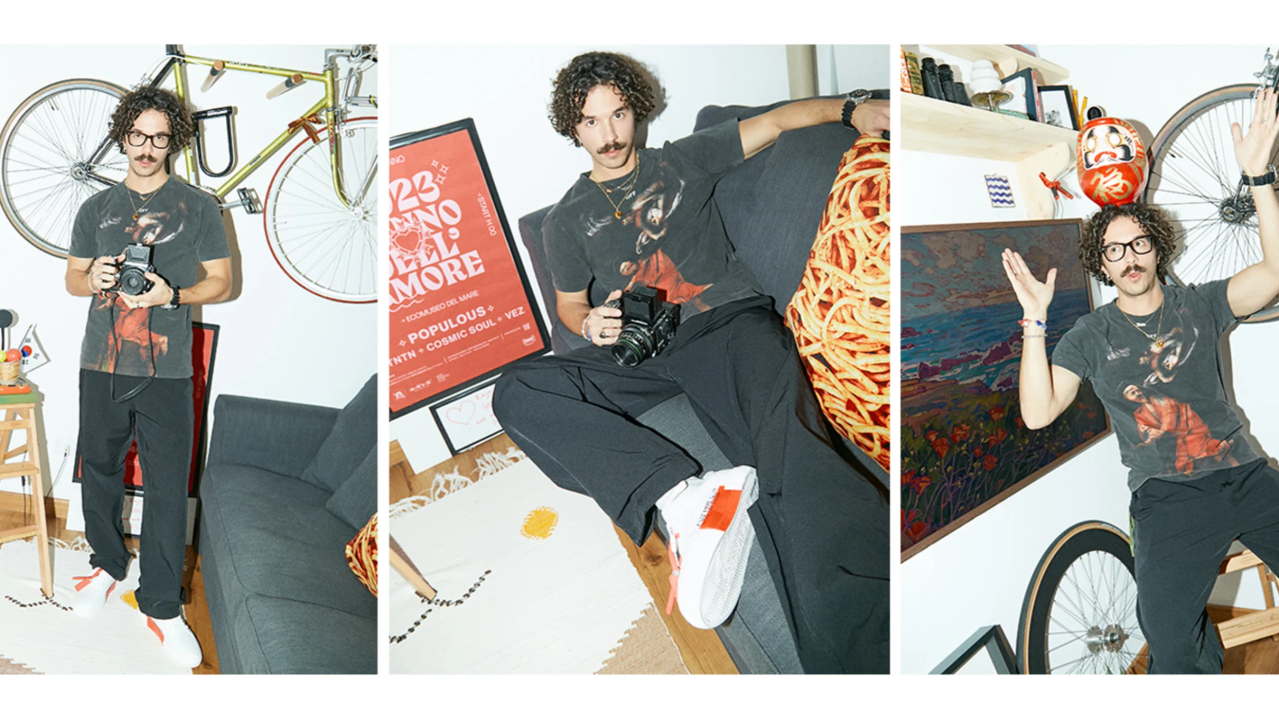
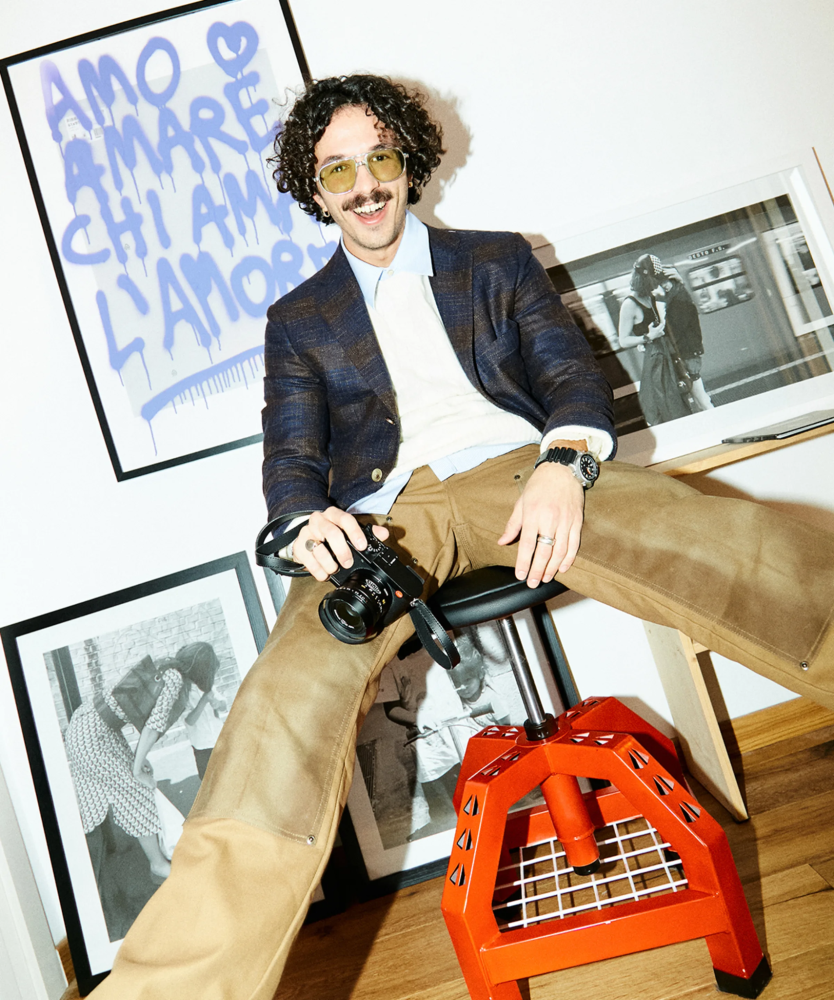
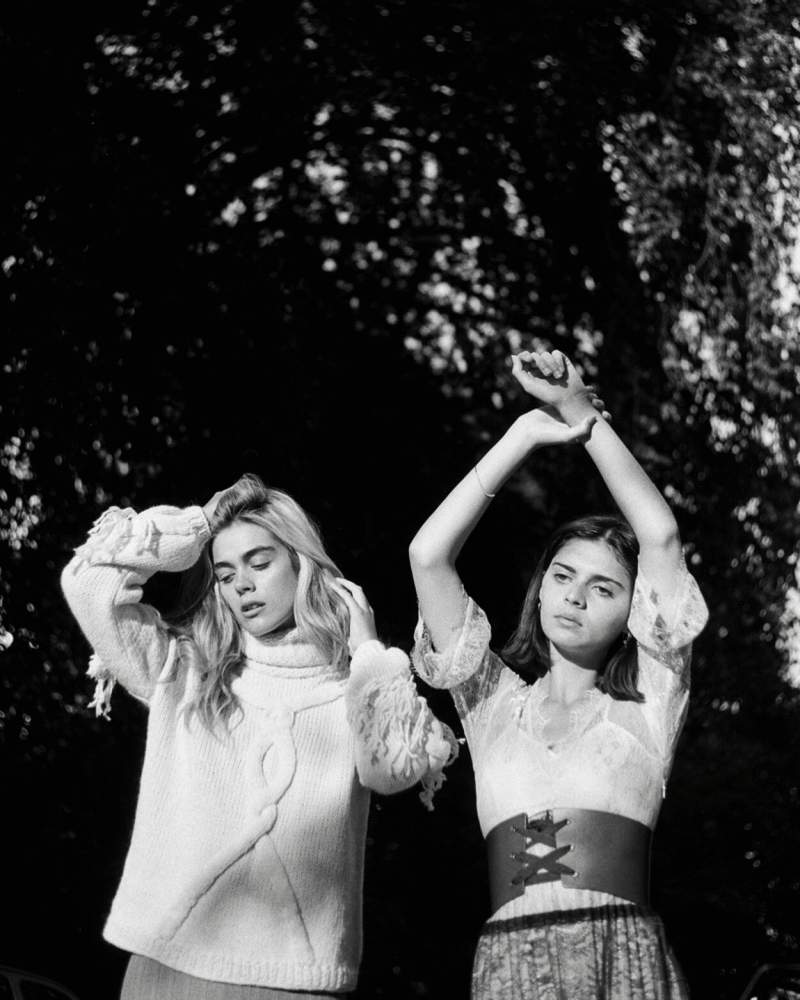
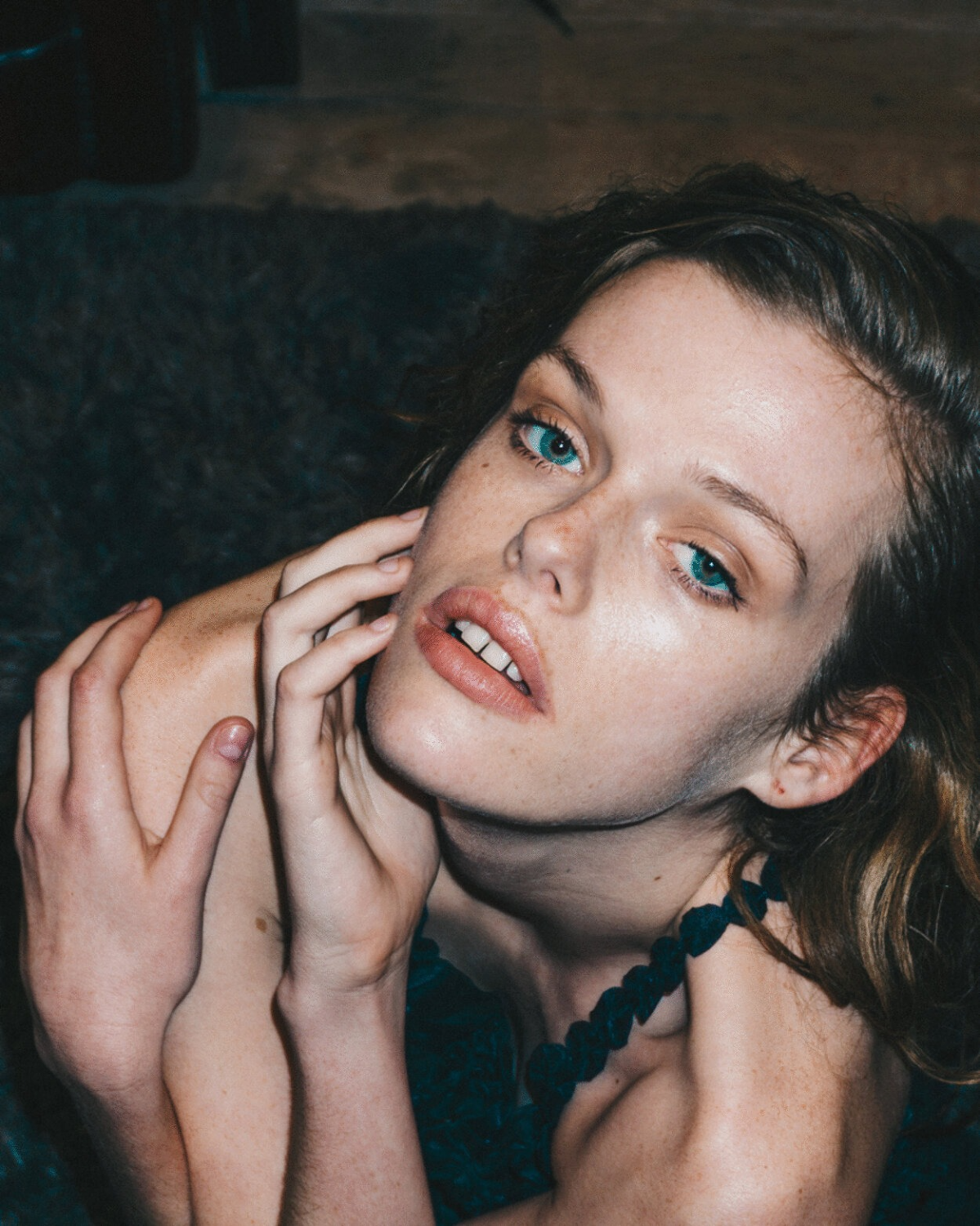
Gabriele is Palermo-born, now based in Milan, and the word he returns to, without sounding like he’s repeating a slogan, is ‘story.’ On paper, you might describe him as a photographer and visual storyteller whose work moves between the commercial world (fashion, lifestyle, commissioned shoots) and something more private and observational, the sort of photography that happens when you’re not being paid to make anything look like anything, yet you do it anyway because you can’t stop noticing.
In the episode, he talks about detail with the kind of specificity that suggests he truly means it: a kiss on the street; a gesture; the brief, unguarded softness that shows up when people forget they are being watched. It’s a small vocabulary, in a sense, but it’s the right one. Big themes are all very well, but the camera doesn’t photograph “love” in the abstract; it photographs hands, shoulders, the angle of a face, and the millimetre where hesitation becomes decision.
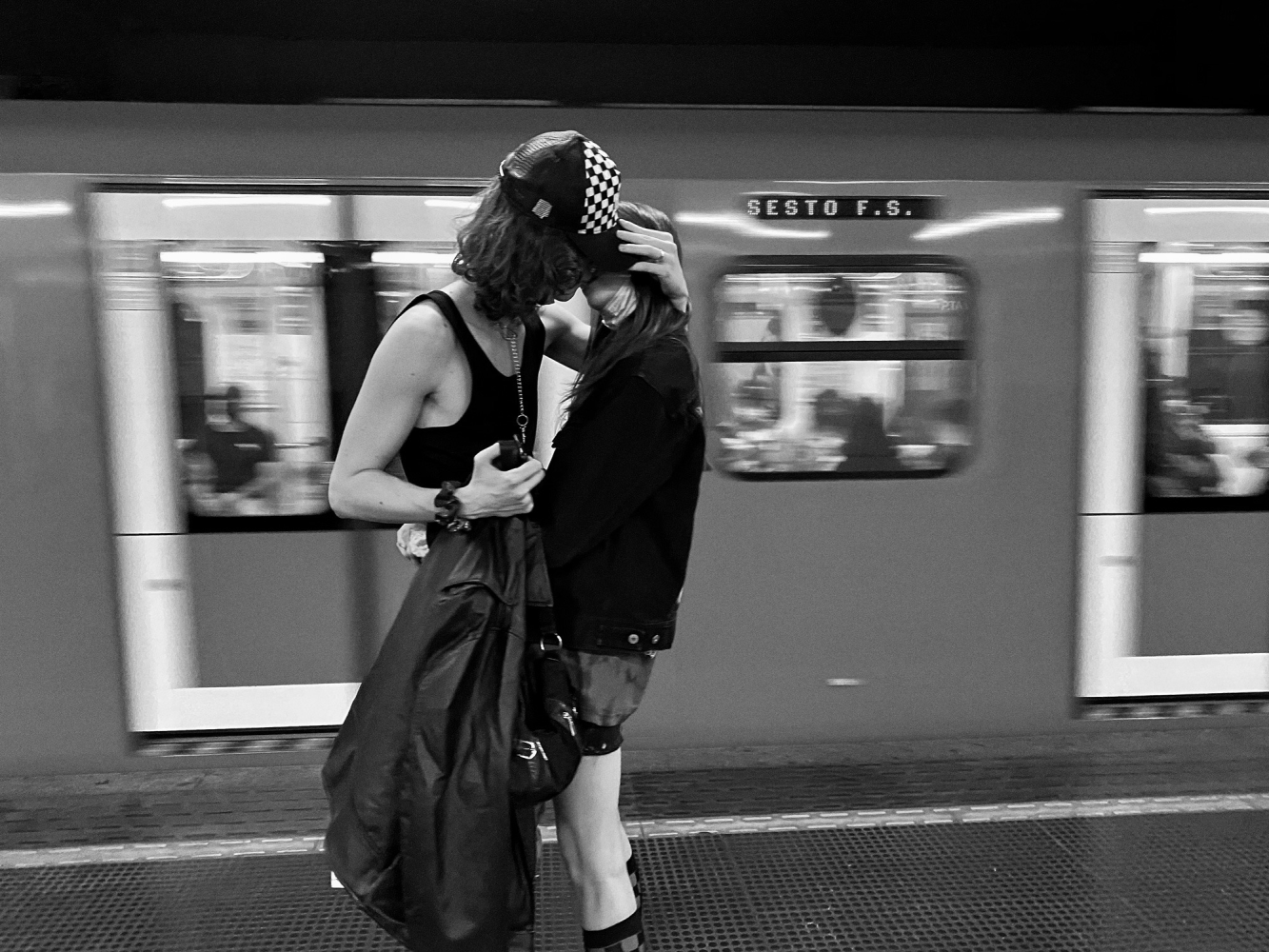
There’s also a useful external marker of what his personal work can do when it’s allowed to breathe. His project Cuore Nero–Metrò, made in the Milan underground, was recognised as a winner at Unpublished Photo 2024 and shown at MUSEC in Lugano, which is not mentioned here as a trophy to polish but as evidence that personal projects, pursued with seriousness, can travel further than one expects. The point is not “win things.” The point is that a project made in a public space, with ordinary tools, can still be strong enough to stand on museum walls, which should be mildly alarming to anyone who believes they must wait for better gear, better time, or better weather.
From weddings to fashion, and the odd usefulness of pressure
Gabriele’s path into fashion, as he tells it, begins somewhere that many aspiring fashion photographers politely omit from their origin stories: weddings. He started shooting weddings in Palermo, often doing both photo and video, and if you’ve ever done wedding work, or merely watched someone do it, you’ll know it is not the genteel apprenticeship some imagine. It is pressure with a smile, logistics dressed as romance, and constant movement in environments where you must be present without becoming the centre of attention.
Yet for a photographer, it’s remarkably good training. You learn speed without aggression, awareness without panic, and the ability to find the moment that will not come again, even if the speeches are running late and somebody has misplaced the rings. It also forces an ethic on you: you are there to preserve something other people will care about long after you have left the venue and returned, exhausted, to your own life.
When he later talks about fashion shoots, you can hear the same instincts. Fashion can be meticulously directed; it can also be strangely fragile, because the difference between a picture that looks “fine” and a picture that feels alive is often a micro-expression, a shift in posture, a moment where the subject relaxes into something human. Wedding work teaches you to hunt for exactly those slivers of truth, and to do it quickly, without turning the process into a performance of your own confidence.
In the episode, there’s a quiet theme of momentum, too: moving cities, saying yes to opportunities, taking the leap before you feel perfectly ready; which, if we’re being honest, is often the only way anything happens. Most careers are built by working with the doubts in the room and proceeding anyway, preferably with decent manners.

Two modes of seeing: direction and reportage
One of the most useful parts of the conversation is how calmly Gabriele describes switching between two ways of working.
There is the directed world—the commissioned shoot, the fashion environment, the collaborative setting where lighting, styling, and intention are arranged with care. In that world, the photographer must lead, but leading is not the same as dominating; it’s closer to hosting. You set a tone, you make people comfortable, you build the conditions under which a person can stop “posing” and start being present.
Then there is reportage (the street, the metro, the observed moment), which has a different etiquette. Here the photographer becomes quieter, quicker, less conspicuous, and Gabriele uses a word that can sound mischievous in translation: “stealing” moments. He doesn’t mean it like a villain; he means it in the simple sense that some moments cannot be requested. You either catch them, or they pass.
“My goal is pure”: the ethics of approaching strangers
At a certain point, the conversation lands on the question that sits behind almost all street photography, even when it’s not said aloud: isn’t it awkward, photographing strangers? Isn’t it invasive? Don’t you feel the weight of it?
Gabriele’s answer is neither a legal argument nor a defensive shrug; he approaches the scene not to extract something clever, but because he believes the tenderness is worth preserving.
You can debate street photography all day, and people do, with great enthusiasm and occasional fury, but it’s difficult to ignore the sincerity of this framing. If the camera is used as a weapon, it shows. If it’s used as a form of attention, that shows too. And while sincerity does not automatically make every photograph ethically spotless, it does shift the posture of the photographer from “I can” to “I’m trying to honour something.”
In the episode, that point comes through not as theory but as temperament. Gabriel’s chasing connection (quietly and persistently), and if there’s a single thread that runs from his commercial work to his personal projects, it’s that he wants the image to carry feeling.
Cuore Nero–Metrò: the underground as a portrait studio
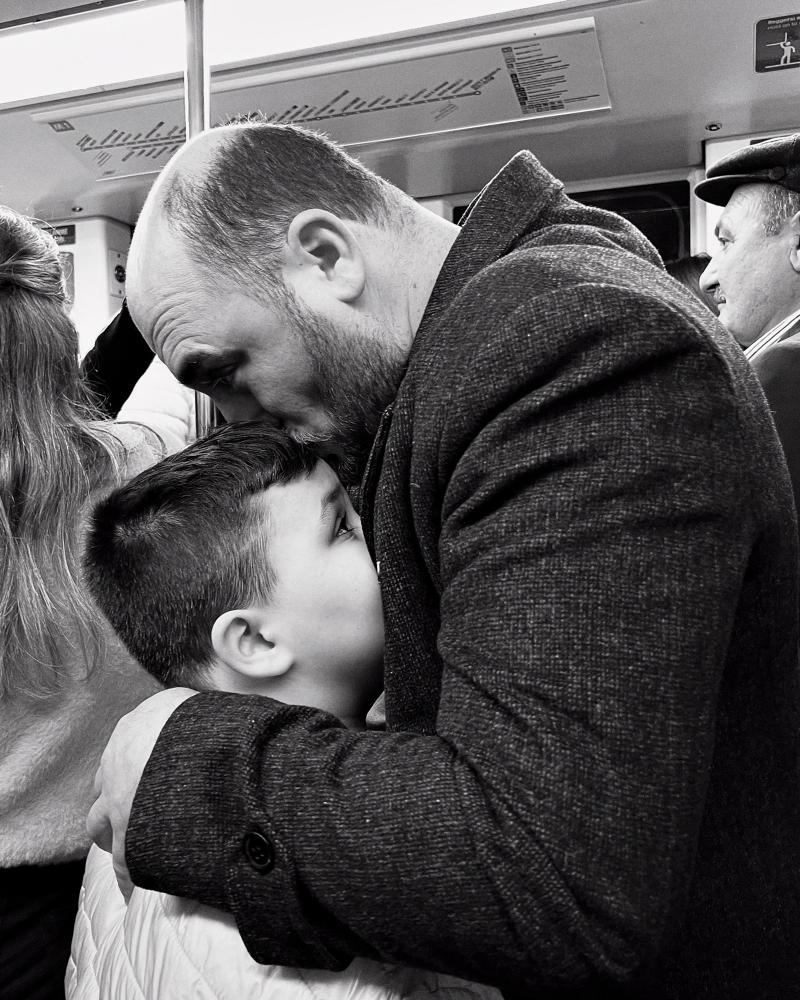
If you want a single example that crystallises the whole conversation, it’s Cuore Nero–Metrò, the metro series. The Milan underground is not, on the face of it, an obvious place to look for romance. It is practical, bright, metallic, and full of people whose expressions suggest they are counting stops or thinking about the espresso they’ve already had and the espresso they’re about to justify having.
And yet the project does not treat the metro as bleak. It treats it as true, then looks for what persists within it: affection, closeness, the small conspiracies of lovers and friends who carve out private space in public.
What makes it compelling is not just that it’s a “nice idea.” It’s that he committed to it, returned to it, and let the subject deepen. The metro becomes a stage without becoming a gimmick; the couples are not props; the images accumulate into something that feels like a document of how people behave when they think nobody is paying attention, which is often when they are most themselves.
He also makes a technical comment that is delightfully practical: the overhead lighting in the metro can behave like fashion lighting. It’s an observation that sounds like a joke until you consider it, and then you realise it’s exactly right. Lighting is not glamorous because it’s expensive; it’s glamorous because it’s directional, and the metro, by accident, can produce a kind of blunt, sculpting illumination that lends faces and hands a sharp clarity.
But the larger lesson is the one that should sit in the back of your mind the next time you postpone a project because your circumstances don’t feel ideal. The metro wasn’t ideal. The phone wasn’t ideal. The conditions weren’t ideal. The attention and intention were.
Gear as constraint
No photography conversation escapes the gravitational pull of gear for long, and the Q&A near the end obliges, as Q&As tend to do. People ask about Leica, about systems, about what one should use, and Gabriele answers in a way that feels neither dogmatic nor dismissive.
He talks about the Leica as something that changes his behaviour. The value, in his words, is not merely optical. A fixed lens forces you to move, to commit, to see the world from a consistent angle long enough for it to become familiar. That kind of constraint can be annoying if you’re hunting flexibility, but it can be oddly liberating if you’re trying to stop fiddling and start looking.
Then comes the detail that deserves to be framed and hung in the hallway of every aspiring photographer who is waiting for permission to begin: Cuore Nero–Metrò was shot on an iPhone 13, in JPEG.
It’s a reminder that “professional” is often a posture rather than a purchase. The phone didn’t make the series. The phone simply allowed him to record what he was already seeing. The seriousness was the deciding factor: the willingness to return and build coherence from ordinary scenes.
If you are the sort of person who has been telling yourself, for months, that you will begin once you have the right camera (or from January 1 since we’re at it), you may find this information mildly inconvenient. You may also find it oddly freeing.
Why personal work lands (and why that matters)
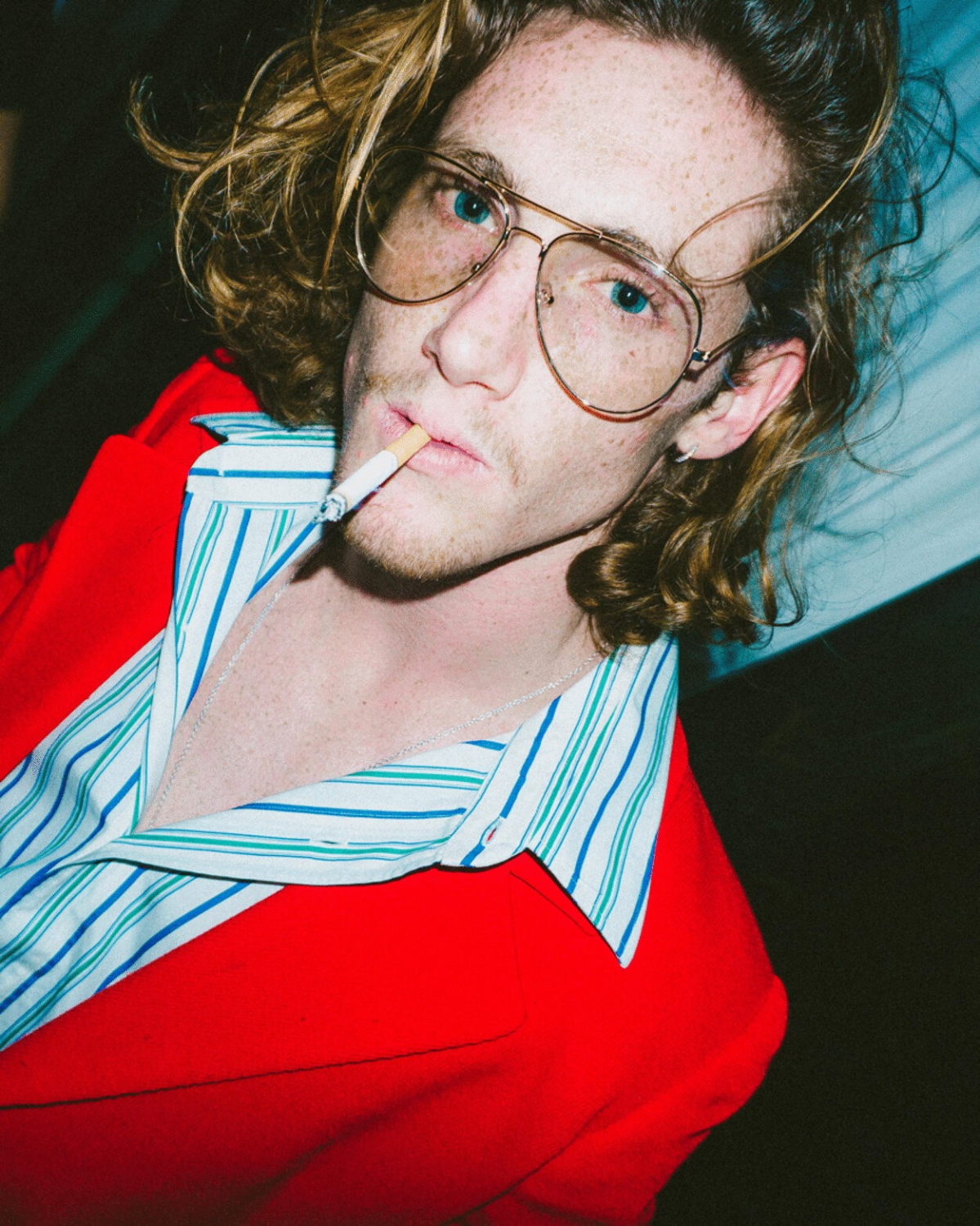
There’s a moment in the conversation where Gabriele reflects on what audiences respond to, and his conclusion is that people often connect more with his personal work than with images of “amazing models.” That shouldn’t shock anyone who has spent five minutes online, yet it still catches photographers off guard, because the commercial world trains you to believe that polish is the goal.
But people don’t share polish for its own sake. They share feeling and recognition.
Personal work, in that sense, is not a side hobby. It’s often the clearest signal of what you’re actually trying to say with a camera. It may not pay immediately, but it builds trust, because it reveals your passion. And passion, unlike trend, tends to have a longer shelf life.

Confidence as hospitality
Gabriele also talks about working with people in a way that feels more like hospitality than direction. He says, essentially, that shooting with him is mostly talking, and that he doesn’t rush for the camera until the atmosphere is right. The point is not to “control” the subject; the point is to make the space safe enough for the subject to stop thinking about how they look and start inhabiting their own presence.
In an era where so much creative advice is framed as a hack, it’s refreshing to hear someone describe something slow and human and unglamorous. Comfort takes time. You can’t fake it with charisma alone, and if you try, the picture will report you.
It’s worth noting, too, that this approach makes his street work feel less contradictory. If your baseline posture is respect, then you carry that into every context. You may work quickly, you may “steal” moments, but you are still trying to preserve rather than exploit.
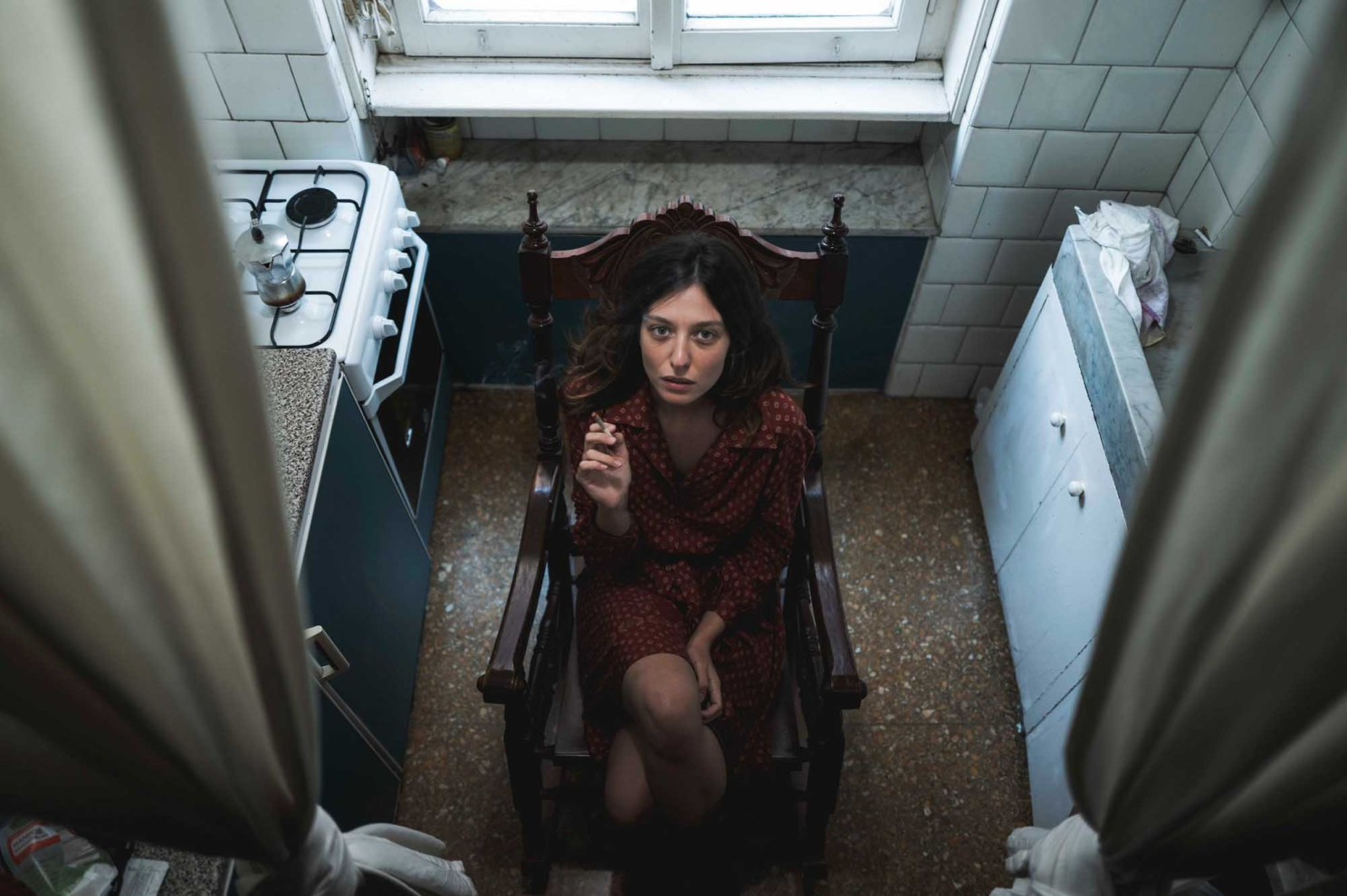
For the shy photographer: a practical progression that doesn’t require heroics
One of the most grounded parts of the episode is the advice offered to photographers who feel shy, hesitant, or simply unsure about approaching people.
The solution, in essence, is to build your eye where you can. Start with landscapes or still life, where nothing judges you, and where you can learn framing, light, and patience without social pressure. Then move to friends, where the stakes are lower and the feedback loop is kinder. Then, when you’re ready, approach strangers, but do it in the way that suits you, rather than forcing yourself into a persona you can’t maintain.
It’s a progression that respects temperament. Not everyone is built for loud confidence, and not everyone needs it. Some people make their best work quietly. The important part is not that you become fearless, but that you keep working, steadily, until your attention becomes reliable enough to guide you even when your nerves are present.
Gabriele’s line here is simple: keep going, and find the way that suits you best. It’s the sort of advice that feels almost too obvious until you notice how rarely people follow it.
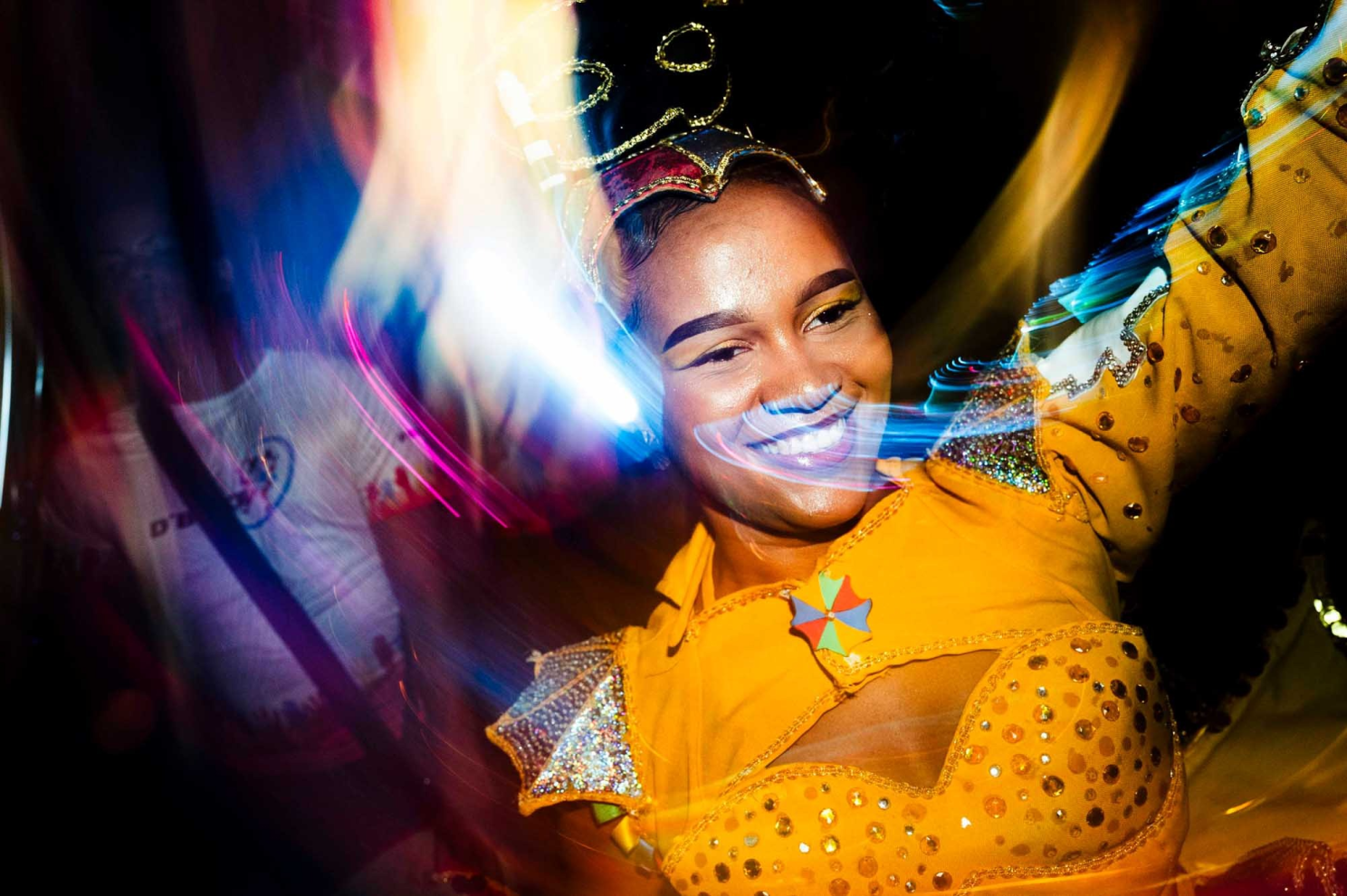
A brief detour into AI, and a return to the point
The conversation also touches AI, with the appropriate level of humour—“cheat GPT”—and then returns to the essential distinction: tools can generate images, but they cannot generate the lived moment that gives a photograph its meaning to you. A photograph, at its best, is not merely a visual; it’s a memory with edges, a small proof that something occurred, and that you were awake enough to see it.
Three takeaways we’re carrying forward
When we revisit an episode, we try to take something away that changes behaviour. From Episode 11, these are the ideas that stayed with us:
- Treat the small moment as worthy, because “important” is often just a question of attention sustained long enough to notice.
- Choose constraints on purpose, because limitation can sharpen your work when it stops you from constantly negotiating with options.
- Keep a personal project alive, because it’s often the most honest record of your voice, and voices (unlike trends) age surprisingly well.
Listen to Snapshot Episode 11 with Gabriele D’Agostino
If you’d like the full conversation, including the late Q&A on Leica, street confidence, and the gentle, persistent logic behind Cuore Nero–Metrò, have a listen to Snapshot Episode 11.
It’s funny, occasionally sharp in the best way, and, if you are at all interested in photography as a form of attention, unexpectedly useful.
Featured here:
- Snapshot episode with Gabriele
- Gabriele’s website
- Unpublished Photo 2024 / MUSEC exhibition
- Rolling Stone on Gabriele
Images features here are sourced from public web, Gabriele’s site, and MUSEC exhibition.
Again, just a reminder, if you have a story to tell and need help telling it, you know where to find us—23-25 Gwydir St, Cambridge or here.