How Cambridge united football

The liveliness of the game that evening in 1838 had amused George Elwes Corrie, writer of the above lines and a tutor at Jesus College who went on to be its master in 1849. But for most early enthusiasts of the game up and down the country, whether Gownsmen or ordinary towns folk, liveliness often led to chaos. For no one was quite sure what the game really was. Was it a dribbling and handling game? A game played purely by kicking at a ball? Was it both? How was a point scored? What happened if there was “hacking”, or kicking at an opponent’s shin (which would be a clear foul in today’s game and probably earn a card)?
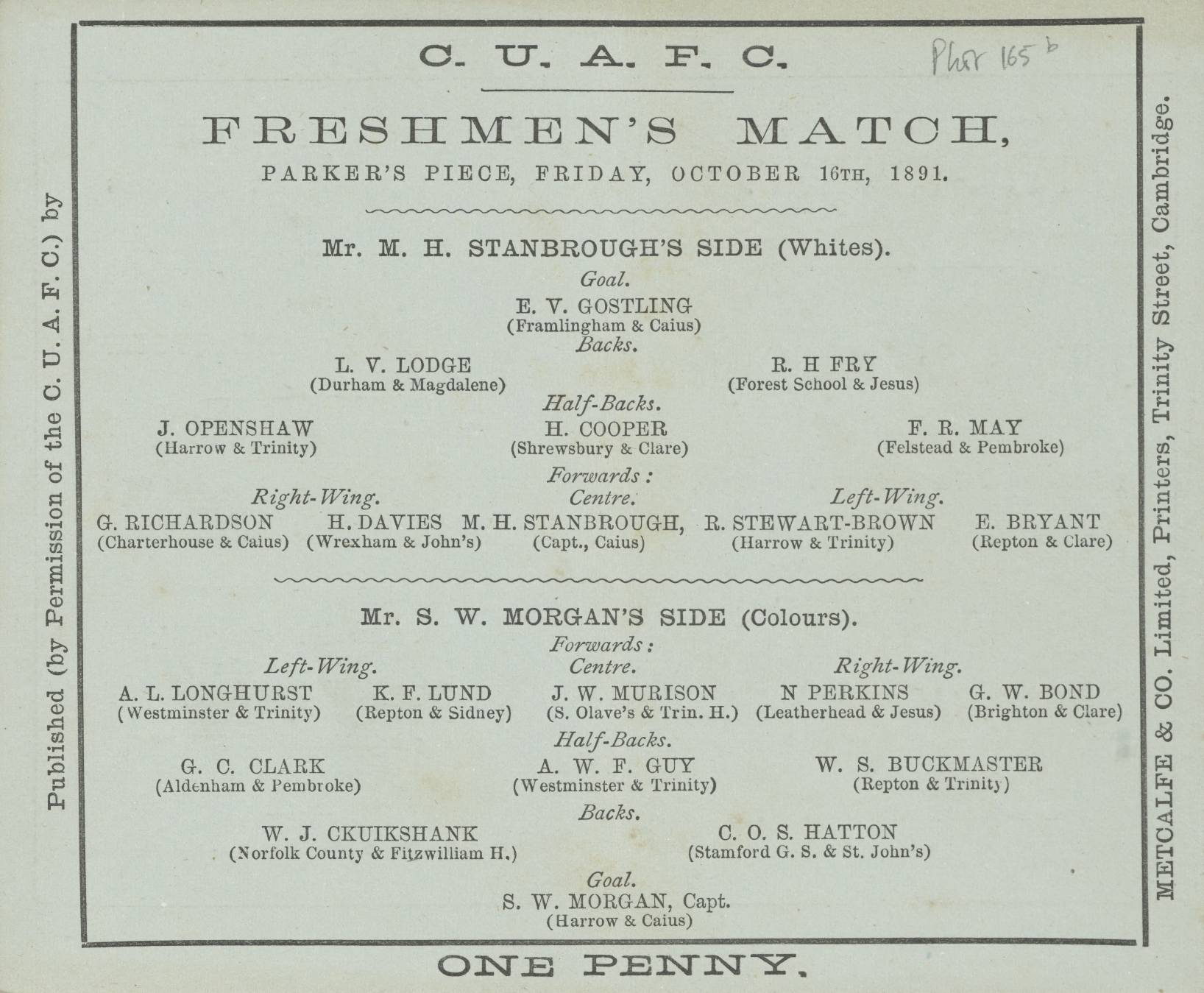
The problem was that during the 18th and 19th century England, football was mainly played at public schools and university campuses according to their own house rules. Eton played a different version of the game from Harrow; Rugby had its own traditions and so did Shrewsbury and Winchester. When these public schoolboys met on the sports fields in Oxford and Cambridge, chaos ensued. Like on that day at Parker’s Piece that Corrie wrote about.

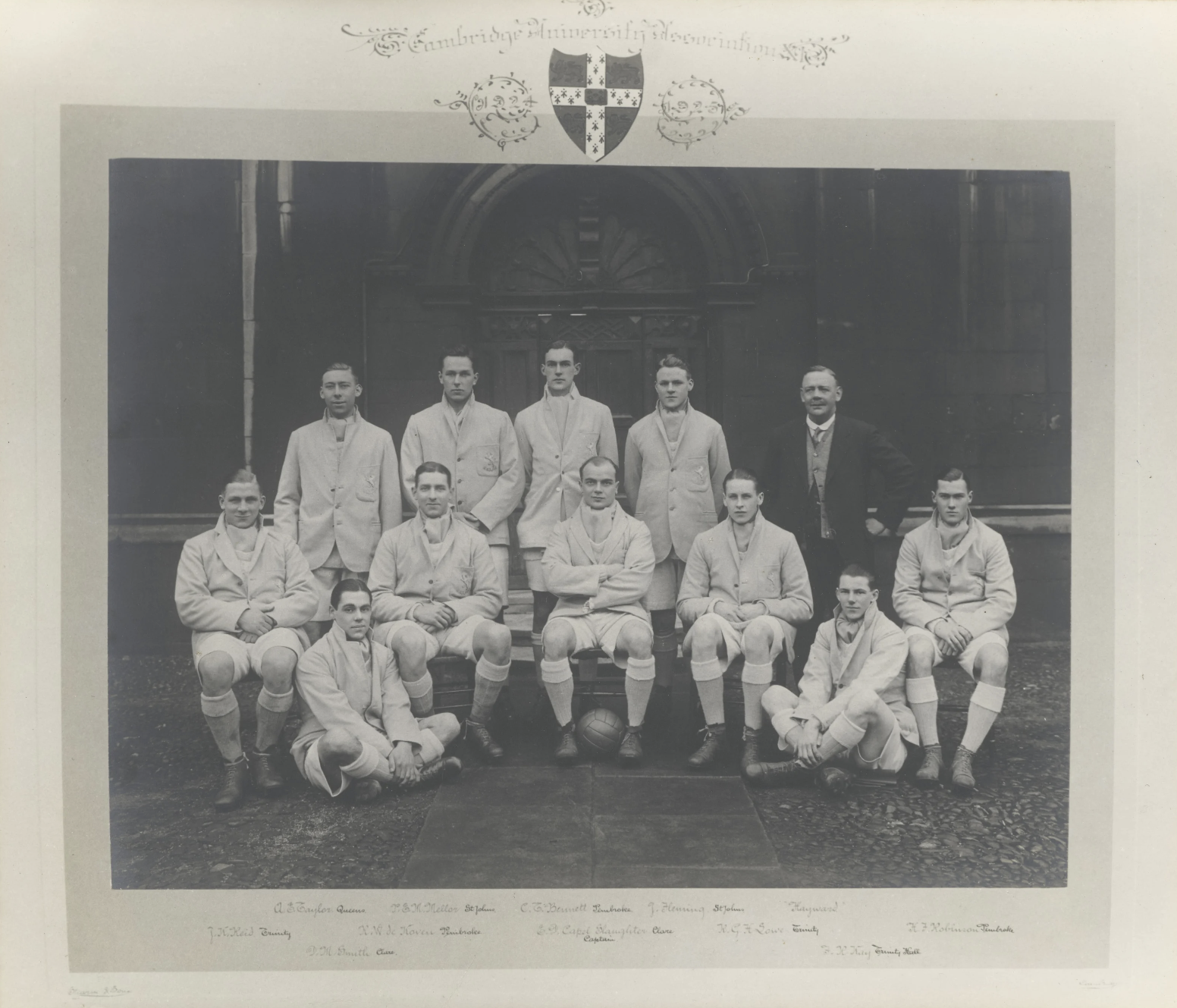
There were some attempts made to standardise the game during the 1840s and 1850s, but none had a lasting impact. Till one evening in October 1847, a handful of Cambridge men decided to sort it out among themselves and drew up the Cambridge Rules. A Trinity student, Henry C. Malden, described how the Rules came about. Two men representing each of six public schools and two representing the university, including Malden, formed a committee. They met in Malden’s room at 4pm, each armed with a copy of their school rules. It was nearly midnight by the time they agreed on the new rules. “We broke up five minutes before midnight. The new rules were printed as the 'Cambridge Rules,' copies were distributed and pasted up on Parker's Piece, and very satisfactorily they worked…A fair catch, free kick (as still played at Harrow) was struck out. The off-side rule was made less stringent. 'Hands' was made more so; this has just been wisely altered."
Today, these decisions may sound obvious, but at a time when football was still splitting into different families of games, the Cambridge Rules offered an attractive alternative: a fast, passing game in which the ball, rather than the player, did most of the travelling. They even included an early offside law, encouraging teamwork instead of goal-hanging.
The Cambridge Rules’ influence extended far beyond Parker's Piece. When the Football Association was set up in London in 1863 to produce the first official Laws of the Game, the Cambridge Rules served as the template. The FA ultimately rejected hacking and carrying the ball, adopting many of the Cambridge principles that underpin modern football.